Nutritional values are estimates per serving
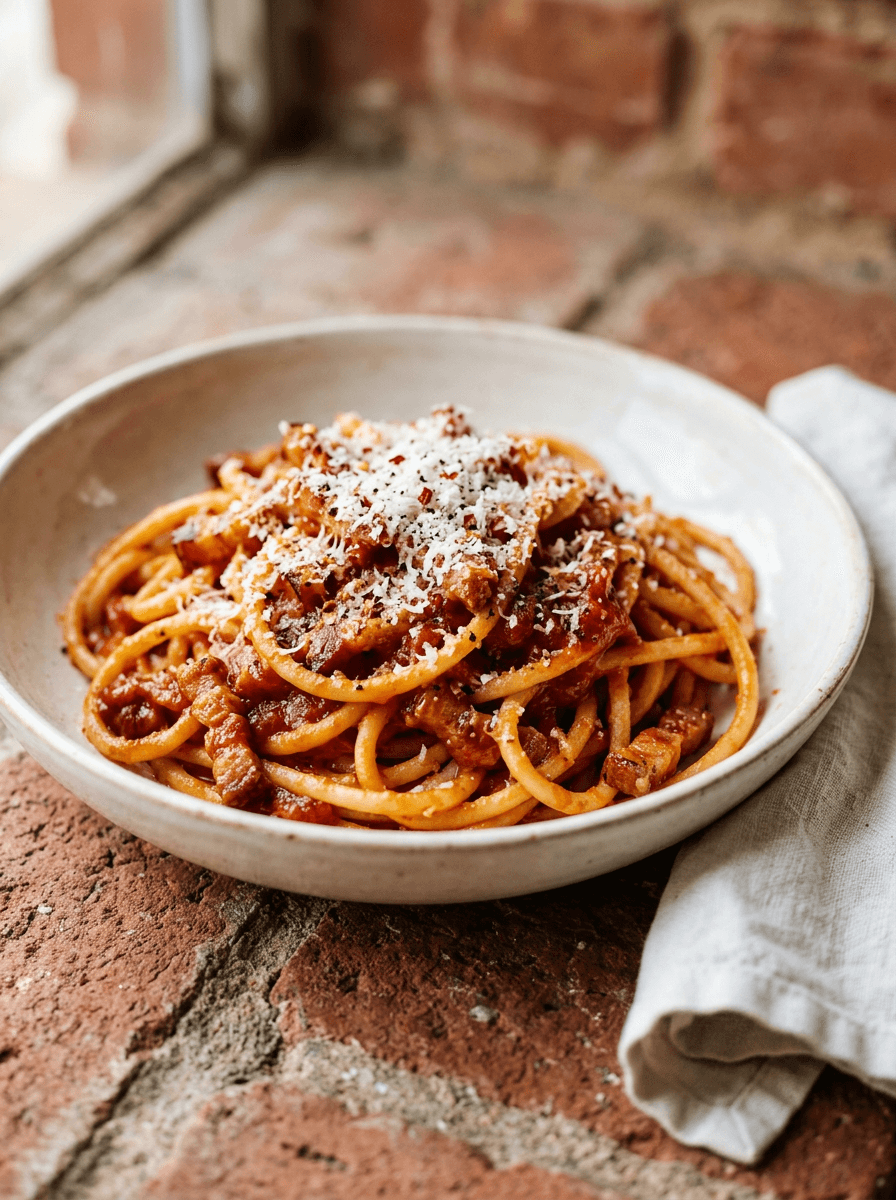
One of the four sacred Roman pastas. Crispy guanciale, San Marzano tomatoes, Pecorino Romano and bucatini — nothing else. No garlic, no onion, no herbs. Just four ingredients done perfectly. This is what Roman trattorias have been serving for centuries.
A note from us
The authentic Amatriciana from Amatrice has no garlic, no onion and no fresh herbs — the people of Amatrice are famously strict about this. The flavour comes entirely from the quality of the guanciale and tomatoes. San Marzano tomatoes are worth seeking out — their sweetness and low acidity is what gives the sauce its distinctive character. Guanciale is available from Italian delis and some larger supermarkets. Pancetta is the widely accepted substitute and gives an excellent result.
What you need 🛒
How to make it 👨🍳
Bring a large pan of heavily salted water to the boil.
Add the olive oil and guanciale to a cold wide pan. Turn the heat to medium and cook slowly for 8-10 minutes until the fat has rendered completely and the guanciale is golden and crispy. Do not rush this on high heat — slow rendering gives a better result.
Add the chilli flakes and stir for 30 seconds.
Pour in the white wine and let it bubble vigorously until completely evaporated — about 2 minutes.
Crush the San Marzano tomatoes by hand directly into the pan. Add a generous crack of black pepper. Simmer over medium-low heat for 15 minutes until the sauce has thickened and deepened in colour.
Cook the bucatini in the boiling salted water until just al dente — 1 minute less than the packet says. Reserve a large mug of pasta water before draining.
Add the drained bucatini directly into the sauce. Toss vigorously over medium heat adding pasta water a splash at a time until the sauce clings to every strand.
Remove from the heat. Add half the Pecorino Romano and toss again — the residual heat will melt it into the sauce.
Serve immediately with the remaining Pecorino Romano grated generously over the top and an extra crack of black pepper.