Nutritional values are estimates per serving
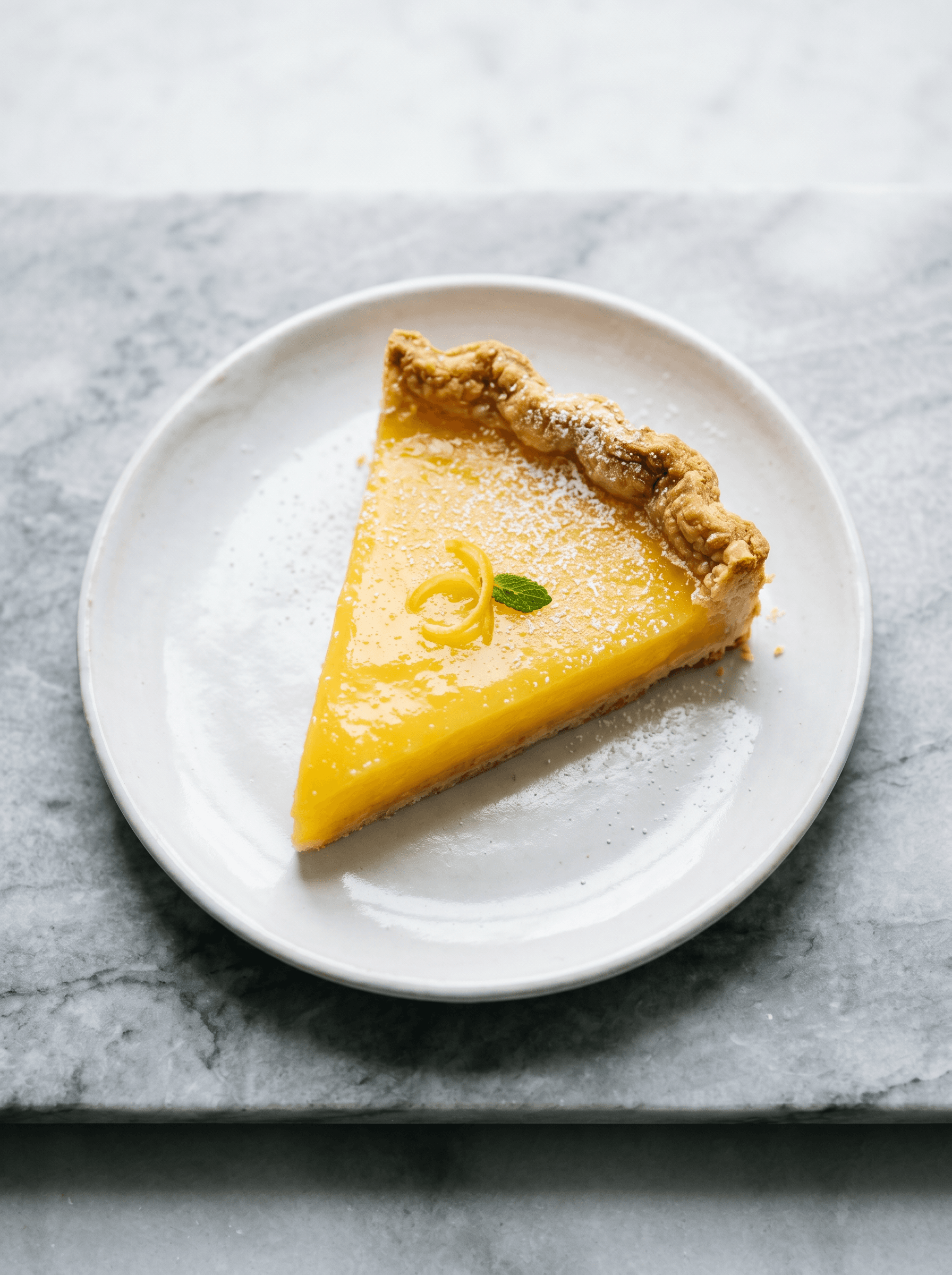
Sharp, silky, perfectly balanced. Looks like it came from a proper patisserie. Your secret? It's honestly not that hard.
A note from us
The authentic French tarte au citron has no meringue — that is the British lemon meringue pie, a different dessert entirely. The French version is served plain, perhaps with a light dusting of icing sugar or a little crème fraîche on the side. The filling should be just set with a very slight wobble in the centre when it comes out of the oven. Use freshly squeezed lemon juice only — bottled juice gives a flat, slightly bitter result that ruins the delicate flavour of the tart.
What you need 🛒
How to make it 👨🍳
Make the pastry: rub the cold butter into the flour and icing sugar with your fingertips until the mixture looks like fine breadcrumbs.
Add the egg yolks and just enough cold water to bring the dough together — it should not be sticky. Shape into a disc, wrap, and rest in the fridge for 30 minutes.
Roll the pastry out on a lightly floured surface to about 3 mm thick and line a 23 cm loose-bottomed tart tin. Press it firmly into the edges and trim any overhang. Prick the base with a fork and chill for another 20 minutes.
Line the pastry case with baking paper and fill with baking beans (or dried rice or lentils). Blind bake at 180°C / 350°F for 15 minutes, then remove the paper and beans and bake for another 10 minutes until pale golden.
Whisk together the eggs, egg yolks, caster sugar, fresh lemon juice, lemon zest, and double cream in a bowl until smooth.
Reduce the oven to 140°C / 285°F. Pour the lemon filling into the hot pastry case — fill it while the case is still in the oven to avoid spills.
Bake for 30–35 minutes until the filling is just set with a gentle wobble in the centre. It will firm up as it cools.
Cool completely at room temperature before refrigerating. Slice only when fully cold — a warm tart will not cut cleanly.