Nutritional values are estimates per serving
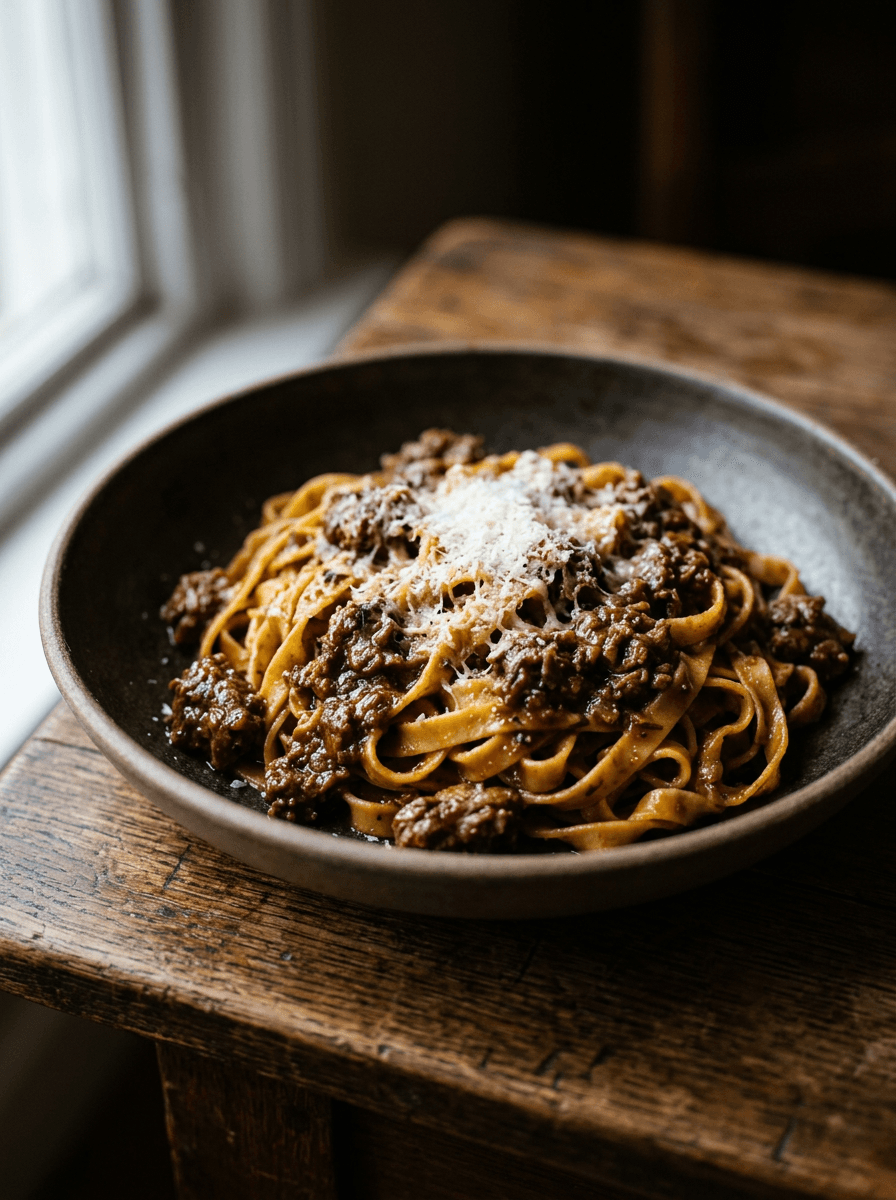
The real one. Slow cooked beef and pancetta ragù that clings to every ribbon of tagliatelle. This is not a quick weeknight sauce — it takes two hours and it is worth every minute. The kind of dish that fills the whole house with the smell of something extraordinary.
A note from us
The soffritto and the long slow simmer are the two things that separate a great ragù from an average one. The vegetables must be cooked until completely soft and sweet before the meat goes in — they dissolve into the sauce and give it a depth you cannot achieve any other way. The milk at the end is the traditional Bologna technique and it makes a real difference to the final texture.
What you need 🛒
Ragù genuinely improves overnight. Make it the day before, refrigerate and reheat gently the next day. The flavour deepens significantly and the texture becomes even better.
How to make it 👨🍳
Heat the olive oil and butter in a large heavy based pan over medium heat. Add the pancetta and cook for 5 minutes until the fat has rendered and it is starting to turn golden.
Add the onion, celery and carrot — the soffritto. Cook over low heat for 15 minutes stirring occasionally until completely soft and sweet but not coloured. Do not rush this step — it is the flavour foundation of the whole sauce.
Increase the heat to high and add the beef mince. Break it up with a wooden spoon and cook until every bit of moisture has evaporated and the meat is properly browned — about 10-12 minutes. This is the most important step. Grey steamed meat gives a flat sauce. Properly browned meat gives depth.
Pour in the white wine and let it bubble vigorously until completely evaporated — about 3-4 minutes. You should be able to smell the alcohol cook off.
Add the tomato puree and stir for 2 minutes. Add the passata and beef stock. Season well with salt and pepper. Stir everything together.
Reduce the heat to the lowest setting. Cover the pan partially and simmer for 1 hour 30 minutes stirring every 20 minutes. The sauce should barely bubble — just an occasional blip. Add a splash more stock if it looks dry.
In the final 10 minutes of cooking pour in the whole milk and stir through. This is the traditional Bolognese technique — the milk softens any residual acidity and gives the ragù a silky richness.
Bring a large pan of heavily salted water to the boil. Cook the tagliatelle until just al dente. Reserve a large mug of pasta water before draining.
Add the drained pasta directly into the ragù pan. Toss vigorously over medium heat adding pasta water a splash at a time until the sauce clings to every ribbon of tagliatelle.
Serve immediately with freshly grated parmesan alongside.