Nutritional values are estimates per serving
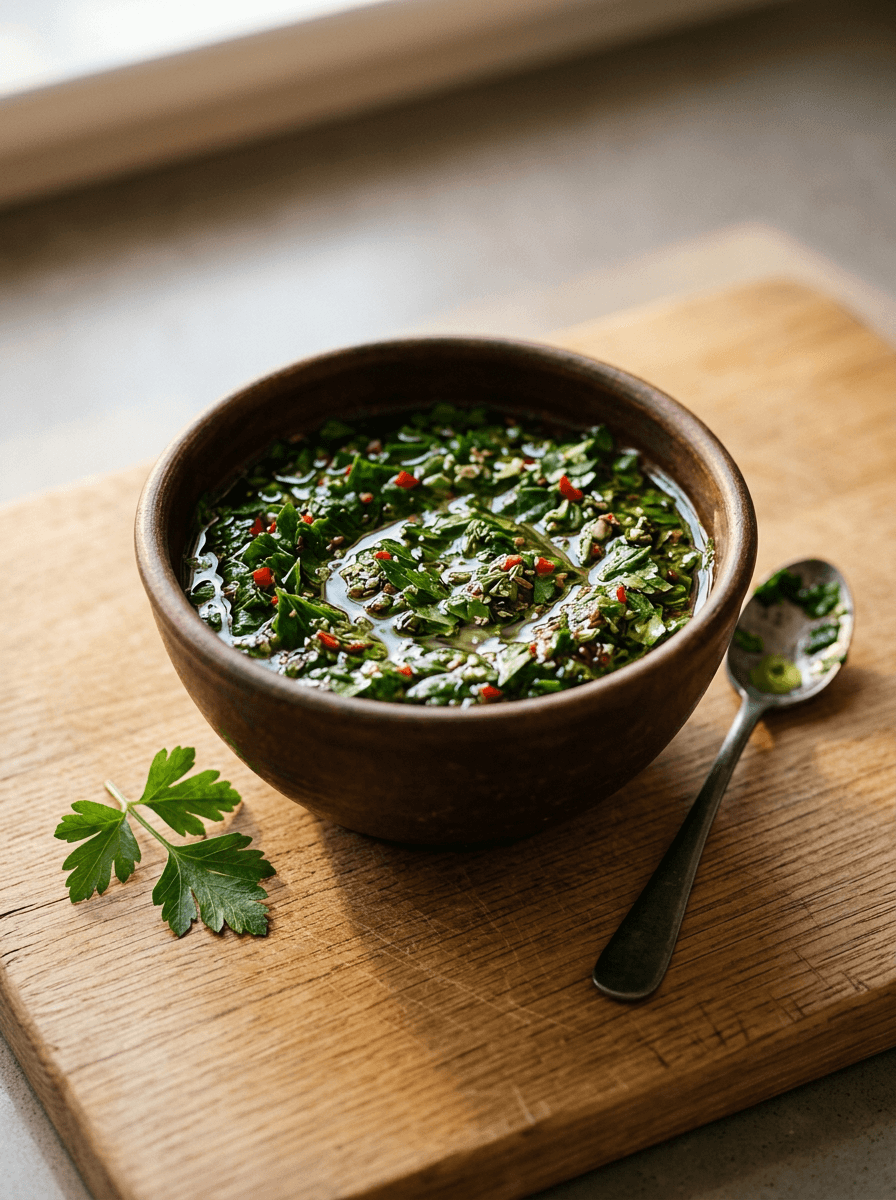
Argentina's greatest contribution to the condiment world. Bright, herby, garlicky and sharp — it makes everything it touches taste better. Incredible on grilled meat, roasted vegetables, burgers, eggs or just eaten with bread.
A note from us
Never use a food processor or blender for chimichurri — blending the olive oil makes it bitter and turns it into a paste rather than a sauce. The hand chopped texture with visible herb pieces is what makes authentic chimichurri what it is. Take the extra 3 minutes and chop by hand. Dried oregano is the traditional Argentine choice for chimichurri — it has a more intense flavour than fresh that works better in the sauce. Fresh oregano works but use half the quantity as it is more pungent.
What you need 🛒
How to make it 👨🍳
The texture of chimichurri is everything — it should be roughly chopped and rustic, not blended smooth. Use a sharp knife on a board — hand chopping is the only way.
Finely chop the parsley and fresh oregano leaves together until they are very fine but still have texture — about 2 to 3 minutes of chopping.
Finely chop the garlic and red chilli separately then add to the herbs and chop everything together a few more times to combine.
Transfer to a bowl and add the red wine vinegar. Stir and leave for 2 minutes — the vinegar starts to macerate the herbs immediately.
Pour in the olive oil gradually, stirring as you go. The chimichurri should be loose and spoonable but not watery.
Add the salt, black pepper and dried chilli flakes. Taste and adjust — more vinegar for sharpness, more chilli for heat, more salt to bring everything together.
Leave to rest for at least 10 minutes before serving — the flavours develop quickly. It is noticeably better after 30 minutes.
Keeps in the fridge for up to 5 days. The colour will darken slightly but the flavour only improves.